Asanoka is a modern Japanese tea cultivar known for its unique, refreshing aroma and a well-balanced flavor profile of sweetness and umami. Its name, meaning "fragrance of the morning," aptly describes its invigorating and aromatic character.
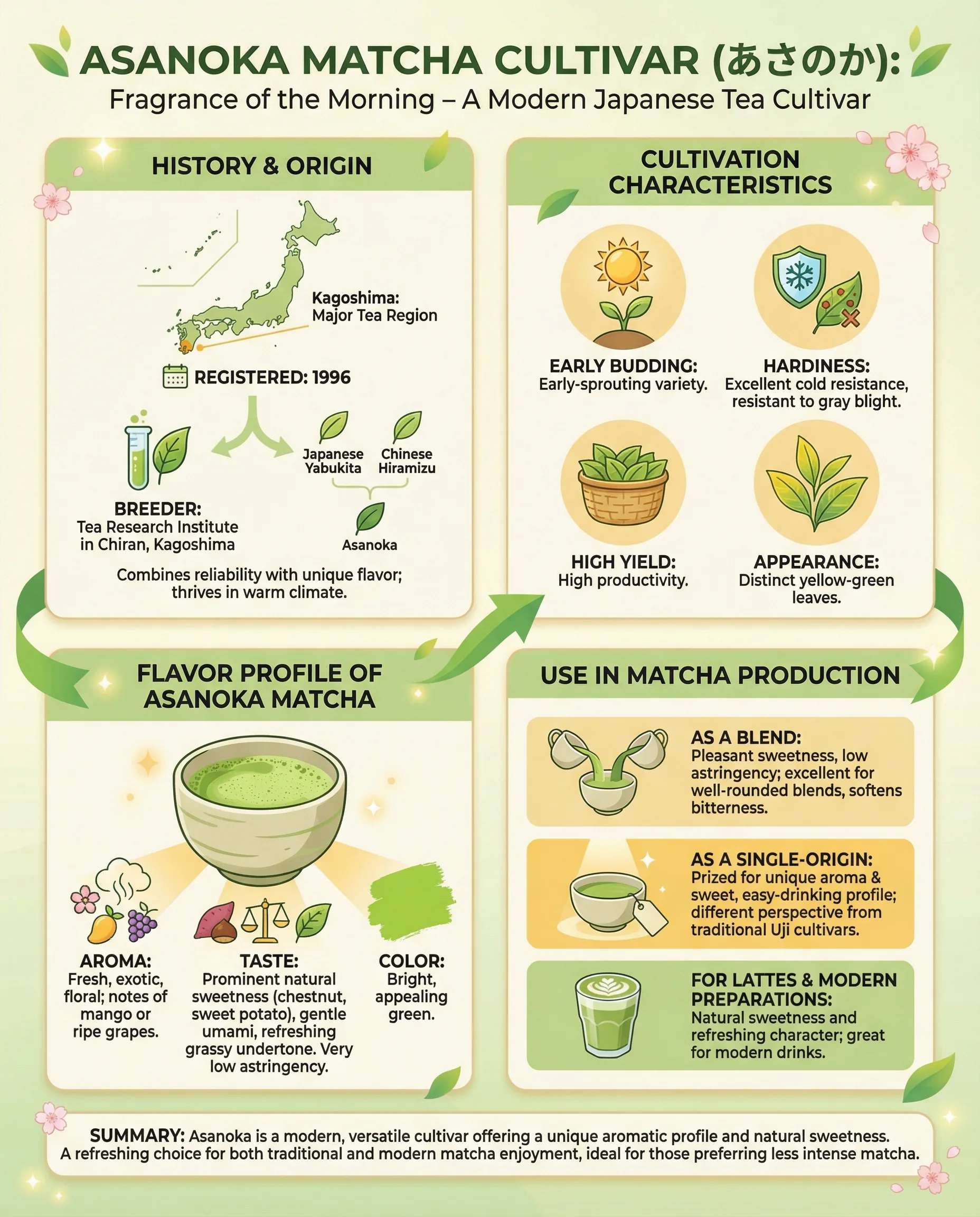
History and Origin
- Breeder: Tea Research Institute in Chiran, Kagoshima
- Parentage: A cross between the Japanese Yabukita and a Chinese cultivar, Hiramizu.
- Registered: 1996
Asanoka is a relatively new cultivar that combines the reliability of Yabukita with the unique flavor characteristics of its Chinese parent. It was developed in Kagoshima, a major tea-producing region in southern Japan, and thrives in its warm climate.
Cultivation Characteristics
- Early Budding: Asanoka is an early-sprouting variety.
- Hardiness: It has excellent resistance to cold and is also resistant to gray blight, a common tea plant disease, making it a robust and reliable choice for farmers.
- High Yield: The cultivar is known for its high productivity.
- Appearance: The leaves are a distinct yellow-green color.
Flavor Profile of Asanoka Matcha
When processed as matcha, Asanoka offers a unique and pleasant flavor experience that distinguishes it from more traditional cultivars.
- Aroma: A fresh, exotic, and slightly floral fragrance, sometimes described as evoking mango or ripe grapes.
- Taste: A prominent natural sweetness, often compared to chestnuts or sweet potatoes, is balanced by a gentle umami and a refreshing, grassy undertone. It has very low astringency, making it smooth and easy to drink.
- Color: A bright, appealing green.
Use in Matcha Production
Asanoka's balanced and unique flavor makes it a versatile cultivar in matcha production.
- As a Blend: Its pleasant sweetness and low astringency make it an excellent component for creating well-rounded matcha blends. It can soften the bitterness of other cultivars and add a unique aromatic dimension.
- As a Single-Origin: Single-origin Asanoka matcha is prized for its unique aromatic qualities and sweet, easy-drinking flavor profile. It offers a different perspective on matcha compared to the more traditional, umami-heavy cultivars from Uji.
- For Lattes and Modern Preparations: The natural sweetness and refreshing character of Asanoka make it a great choice for matcha lattes and other modern drinks.
Asanoka vs Other Cultivars
Asanoka's aromatic, fruit-forward profile makes it something of an outlier among matcha cultivars. Here's how it compares to the varieties you're most likely to weigh it against:
| Cultivar | Character | Best For |
|---|---|---|
| Asanoka | Floral-fruity aroma (mango, ripe grape), chestnut sweetness, very low astringency | Aromatic single-origin usucha, lattes |
| Yabukita | The balanced Japanese standard — reliable, moderate umami | Everyday matcha, blends |
| Saemidori | Clear green liquor, rich umami, low bitterness | Smooth ceremonial usucha |
| Asahi | Deep umami, creamy body, the koicha benchmark | Formal thick tea, connoisseur tastings |
The practical takeaway: choose Asanoka when you want fragrance and sweetness rather than maximal umami. It approaches matcha from the opposite direction to Uji's traditional shade cultivars — and that contrast is exactly why single-origin drinkers seek it out.
Where to Find Single-Cultivar Asanoka
Asanoka remains a rare choice for matcha — it accounts for only a small fraction of Japan's tea acreage, and most of it goes into sencha. Single-cultivar Asanoka matcha comes chiefly from organic growers in Kagoshima (notably the Kirishima area, where the cultivar was bred) and from a handful of small gardens in Wazuka, in Kyoto prefecture's tea hills. Look for first-harvest, single-estate tins from specialty importers — batches are small and sell out seasonally.
Summary
The Asanoka cultivar is a modern and exciting addition to the world of matcha. Its unique parentage gives it a distinctive aromatic profile and a natural sweetness that is both refreshing and satisfying. It is an excellent choice for those who enjoy a sweeter, less intense matcha, and its versatility makes it a valuable cultivar for both traditional and modern matcha preparations.
From Reading About Cultivars to Whisking a Bowl
Tasting notes only go so far — the fastest way to calibrate your palate is whisking usucha yourself under instruction. See our guides to kimono tea ceremony in Kyoto, tea ceremony experience in Tokyo, and tea ceremony in Osaka.