The Asahi cultivar is a prestigious, traditional tea plant variety from Uji, Kyoto, celebrated for producing some of the highest-quality shaded teas in Japan, particularly ceremonial-grade matcha and gyokuro. Its name, meaning "morning sun," hints at the bright, vibrant green color of its leaves.
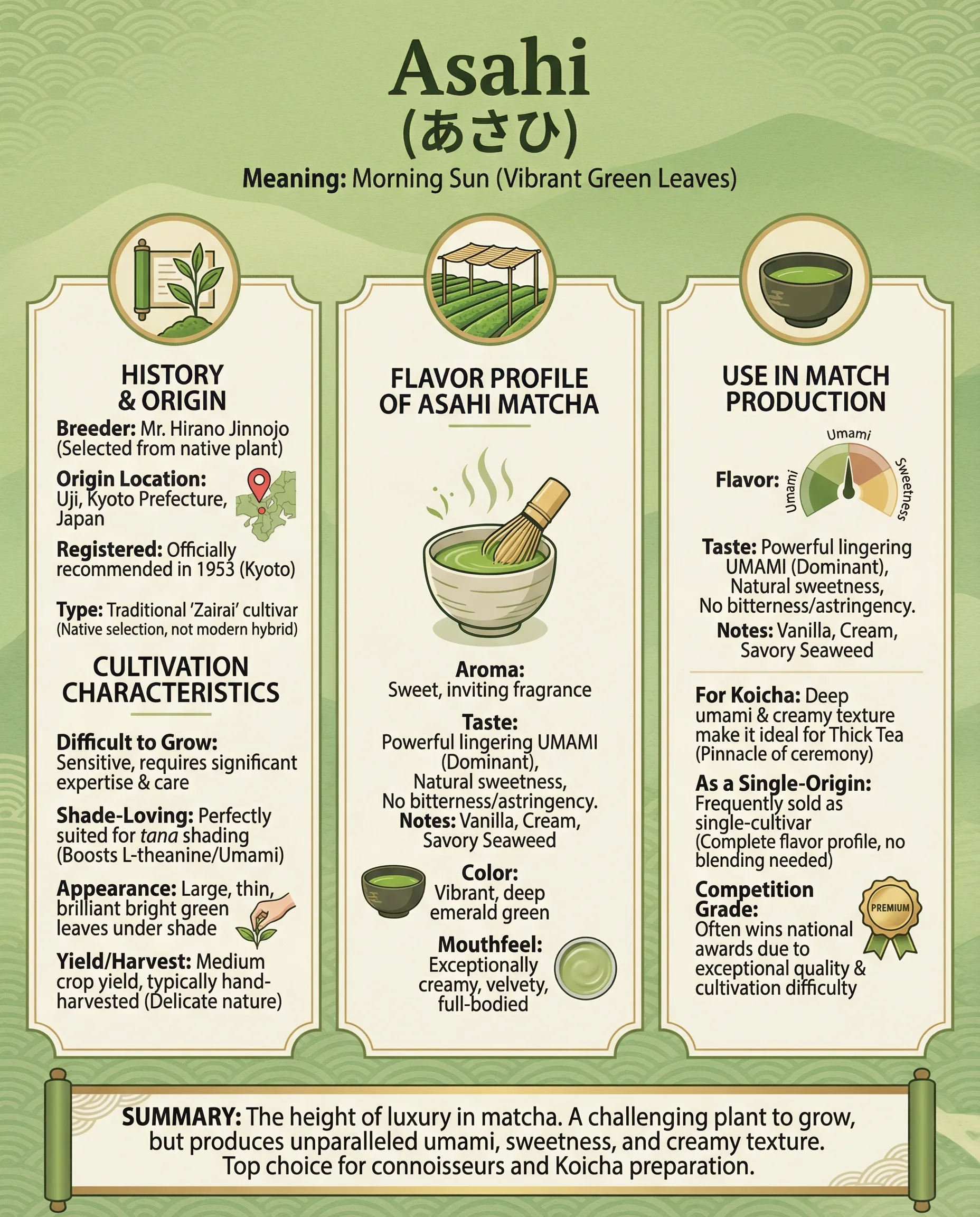
History and Origin
- Breeder: Selected from a native tea plant by Mr. Hirano Jinnojo.
- Origin Location: Uji, Kyoto Prefecture, Japan.
- Registered: Officially recommended by Kyoto Prefecture in 1953.
Asahi is a true Uji cultivar, born and bred in the region most famous for matcha. It was selected specifically for its exceptional performance when shaded, a key process in producing the best tencha (the leaf used to make matcha). It is considered a traditional or "zairai" cultivar, meaning it was selected from the native tea plant population rather than being a modern hybrid.
Cultivation Characteristics
- Difficult to Grow: Asahi is known for being a sensitive and challenging cultivar to cultivate, requiring significant expertise and care from the farmer.
- Shade-Loving: It is perfectly suited for the tana shading method, which allows it to develop a high concentration of amino acids (like L-theanine) and a deep umami flavor.
- Appearance: The leaves are large, thin, and a brilliant bright green when grown under shade.
- Yield: It provides a medium crop yield and is typically harvested by hand due to the delicate nature of the leaves.
Flavor Profile of Asahi Matcha
Asahi is renowned for producing a matcha with a deep, complex, and exceptionally smooth flavor profile.
- Aroma: A sweet, inviting fragrance.
- Taste: A powerful and lingering umami is the most prominent characteristic, balanced by a natural sweetness and almost no bitterness or astringency. Tasting notes often include vanilla, cream, and savory seaweed.
- Color: A vibrant, deep emerald green.
- Mouthfeel: Exceptionally creamy, velvety, and full-bodied.
Use in Matcha Production
The Asahi cultivar is almost exclusively used for producing the highest grades of matcha and gyokuro.
- For Koicha: Its deep umami, natural sweetness, and creamy texture make it one of the most desirable cultivars for making koicha (thick tea), the pinnacle of the tea ceremony. Its lack of bitterness ensures a pleasant experience even at such a high concentration.
- As a Single-Origin: Asahi is frequently sold as a single-origin or single-cultivar matcha, as its flavor profile is highly sought after and needs no blending to be complete.
- Competition Grade: Due to its exceptional quality and the difficulty in its cultivation, matcha made from the Asahi cultivar often wins awards at national tea competitions in Japan.
Asahi vs the Other Uji Shade Cultivars
Uji's traditional shade-grown cultivars each carry a distinct personality. If you're choosing a single-cultivar matcha, this is how Asahi sits among its siblings:
| Cultivar | Character | Best For | Growing Difficulty |
|---|---|---|---|
| Asahi | Deep lingering umami, vanilla-cream notes, velvety body, almost no bitterness | Koicha, competition-grade bowls | Very high — hand-harvested, sensitive |
| Gokou | Confection-like aroma, deep savory flavor | Aromatic usucha, fragrance-first drinkers | High |
| Uji Hikari | Powerful, sophisticated, deeply savory | Formal koicha, umami maximalists | High |
| Saemidori | Brilliant clear green, rich umami, very low bitterness | Approachable ceremonial usucha | Moderate |
Asahi's distinction is texture as much as taste — the creamy, full-bodied mouthfeel is what tea masters prize for thick tea. If you want fragrance first, look at Gokou; if you want an easier entry point at a gentler price, Saemidori delivers much of the umami with less scarcity.
Where to Find Single-Cultivar Asahi
Genuine single-cultivar Asahi is a specialty item. It typically comes from heritage Uji producers and small family estates, hand-picked and stone-milled in limited batches, usually in 30g tins. Expect a significant premium over blended ceremonial matcha — this is the cultivar's scarcity and hand-harvesting reflected in the price. Purchasing options include the online shops of long-established Uji tea houses and specialty single-cultivar importers.
Is it worth the premium? For koicha or a slow, focused tasting — yes, Asahi is the reference point every other cultivar is measured against. For lattes or daily whisking, its subtleties are lost; a culinary-grade matcha or an aromatic modern cultivar like Asanoka serves those better at a fraction of the cost.
Summary
The Asahi cultivar represents the height of luxury in the matcha world. It is a challenging plant to grow, but when cultivated with skill, it produces a matcha with an unparalleled depth of umami, sweetness, and a creamy texture. It is a top choice for connoisseurs and is the go-to cultivar for many tea masters when preparing koicha.
Experience Ceremonial Matcha in Uji's Backyard
Asahi is grown for the tea ceremony — the shaded fields around Uji supply Kyoto's oldest tea schools. To taste what this cultivar was bred for, book a kimono tea ceremony in Kyoto, or try a tea ceremony experience in Tokyo if your itinerary skips Kansai.